
Rahul's medicine journey: first year of uni
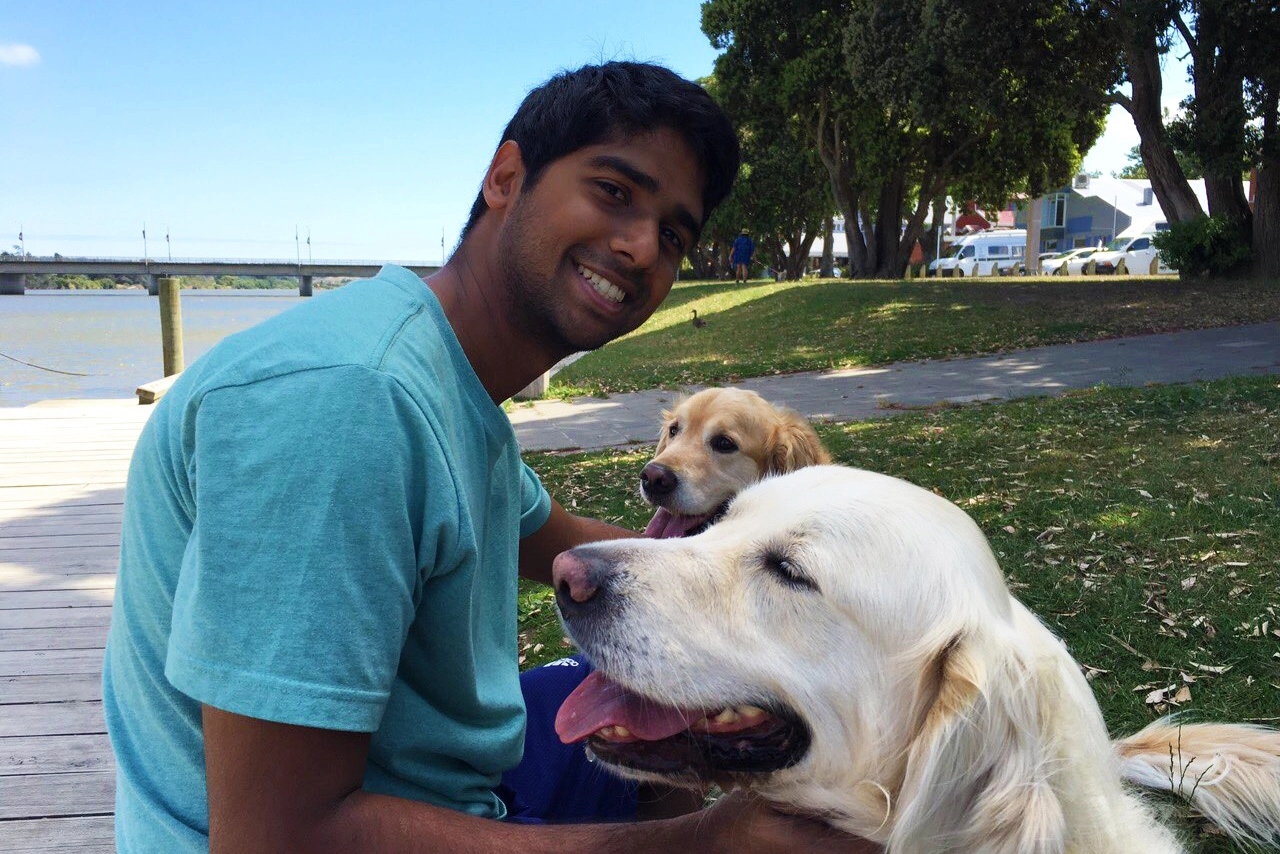
Historical interview: Rahul is describing his first year in 2009. At the time of the original interview, he was a House Officer at Rotorua Hospital. Auckland's courses, admissions test and medicine selection rules have changed since then, so enjoy this as one student's story rather than a current admissions guide. For today's requirements, read our guide to studying medicine in New Zealand.
Meet Rahul.
In 2009, Rahul was a first-year biomedicine student hoping to gain entry into the University of Auckland’s MBChB programme. Here's Rahul to share his experience of first year at uni, including the much-discussed application process for medicine at that time...
Why medicine?
I always knew I wanted to do something science-related. I was leaning towards engineering or veterinary science, but my parents pushed me towards med. The movie Patch Adams was the trigger that ultimately drew me towards med and helped me realise that it was something I could do well.
Year 13
Nothing changed too much academically in high school following my decision. I was already putting in a decent amount of effort at school. In Year 13 my subjects were A Level Chemistry, A Level Biology, AS Physics and A Level Physics (yes, I did both AS and A Level Physics in the same year because the school counsellor advised that I should do A Level Physics in case I wanted to pursue engineering). I had finished A Level Maths in Year 12. Looking back, I could’ve chosen something that interested me for the extra subject. (Editor's note: these were Rahul's subjects in 2009, not a current medicine-entry formula. Cambridge, NCEA and other recognised qualifications can lead to eligible first-year programmes. Check the current entry requirements for the university degree you intend to start.)
First impressions
I really did not anticipate the amount of time I would spend either riding on or waiting for public transport. I lived in Bucklands Beach, which meant a one-hour commute each way. CARPOOL IF YOU CAN, or live closer to town and flat. In my first semester, I was in the PM stream (lectures 1–5 p.m.), which is great because you get to sleep in. The freedom was amazing. I realised I didn’t have to attend lectures if I could use the time better elsewhere. You have full agency to do as little or as much as you want. It’s all up to you, because no one else is monitoring you.
Staying motivated
What kept me motivated was the idea that a lot of people were working for entry into medicine so I had to stay focused. If I started slacking off or wanted to play on my PS3, I would just get it in my head that everyone else was studying while I wasn’t – that really made me get back to work.
Study method
My study method was making notes from a mixture of sources, mainly the textbook as well as lecture slides and course notes. Because I made so many notes, each lecture took me 1 to 2 hours. I never had time to make all the notes for all the lectures, and I was studying 6-8 hours a day. Sometimes I would be 30 lectures behind before the exams. However, I soon realised that some lecturers made amazing notes in the course book and I wouldn’t need anything else to study from for that particular topic. This allowed me to save a lot of time and I stopped with the crazy 6-8 hours of study per day. Once you realise which notes are really good, you can focus on making notes for where the resources have lots of gaps and need more work. It’s pointless to recreate good notes. STUDY SMART, NOT JUST HARD.
Course content
First year med was really the hardest for me. I didn’t know what to expect and I assumed everything would be twice as hard as A Level. My first test was for Pop Health and I got 10/14. I had it in my head that I needed an A+ to get into med so my 10/14 really brought me down. I didn’t realise that everyone had performed similarly. I had this impression in my head that everyone else was really next level, but in reality everyone is on the same level. They’re all just people going through the same thing as you. The content became easier after this shift in mentality. The course content was heavy, but a lot of it built upon what I was familiar with at high school and wasn’t difficult to grasp once I put in the effort.
Labs
Throughout the year there were labs. The labs usually included some form of testing or grading that contributed to the final mark. This was always a little stressful for me. You had to go in bringing your A-game as you were going to be assessed. I couldn’t slack off a little and have fun like a typical lab.
General Education
In semester two, everyone sat a general education paper. Most people went with economics as it was the easiest guaranteed A or A+. I decided to go with something that interested me and chose history. I slightly regretted it at first as it wasn’t as easy, but ultimately I was glad I got to meet a different group of people.
UMAT (the test used in 2009)
The deal with UMAT from my observations is this: some people don’t prepare at all and hit 90+ percentile scores. Others prep a lot and don’t come anywhere close. I’m not a natural problem solver so I knew I would struggle. I started prepping for it two months beforehand during the inter-semester break by doing practice exercises on the website. I allocated a few hours each day during the break to do this. This did result in improvement but nothing exceptional. I went to a workshop that was largely useless as it was just practice questions. I ended up getting an average score that I was happy enough with. If you are not a natural problem-solving pro, I recommend doing past papers so you know what to expect and the general format. The rest depends on execution on the day: stay calm and carry on.
Editor's note: UMAT is no longer used. For Auckland's 2027 intake the admissions test is UCAT ANZ; Auckland has announced Casper for 2028. Otago also uses UCAT for its relevant 2027 entry categories.
Interview
By the time the interview came around, I was really excited and nervous for it, especially after all the rumours that had been going around. I think it can be as scary or as casual as you want it to be. I went in with a casual and positive attitude, and was determined to be myself, which translated to a relaxed interview. If I’d gone in with an attitude of fear, it would have come through in my demeanour and ability to answer the questions. As for the GPA cut-off for interviews in my year, I knew people who got short-listed with a B- average. From what I heard from these people, it seems like they had a harsher interview experience compared to people with higher GPAs, although this is purely anecdotal.
Editor's note: this describes the interview process and anecdotes from Rahul's year. Auckland's current minimum GPA, interview-ranking and final-selection rules are published separately for each intake and should be checked on the official MBChB page.
Staying sane
I loved the city life aspect of uni, the restaurants and cafes, and making friends. It’s definitely important to make friends. Even if they’re people you’re competing with for spots in med, they’re ultimately people just like you and you form some really great friendships. It’s important not to get into a defensive mindset, not helping fellow students and that kind of thing. At the end of the day it’s not going to make a difference, and it’s a slippery slope if you decide that’s the kind of path you want to take. Taking time to chill is also really necessary. I continued to play soccer, which was so good for me. It was something to look forward to every week, helped keep me sane and was a good place to hang out with people.
What I'd tell my first-year self
Uni is a big place with a lot of people. You may be lucky enough to have old friends in your class, but otherwise, a great part of uni is making new ones. Immerse yourself in the uni experience. You will miss it!
By Maggie from MyTuition
If you have questions about high school, uni, careers, or anything tangentially related to those things, I would love to hear from you at team@mytuition.nz